
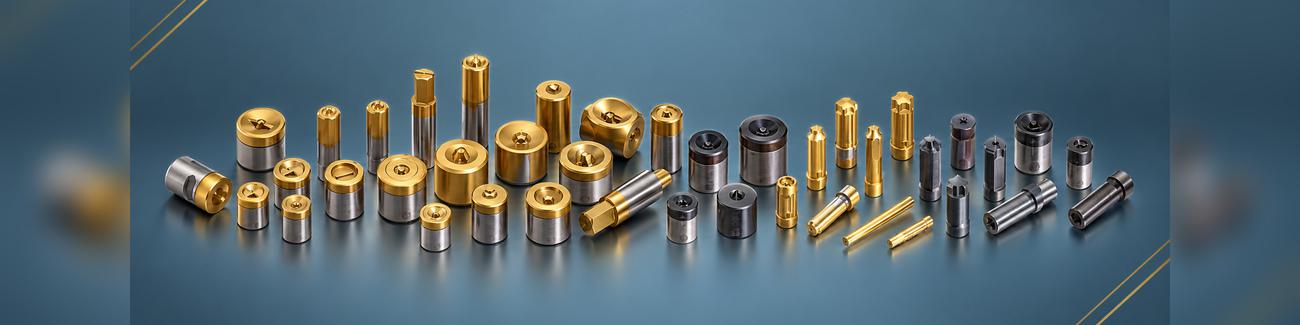

Heading Die,Carbide Insert
GXP Click here
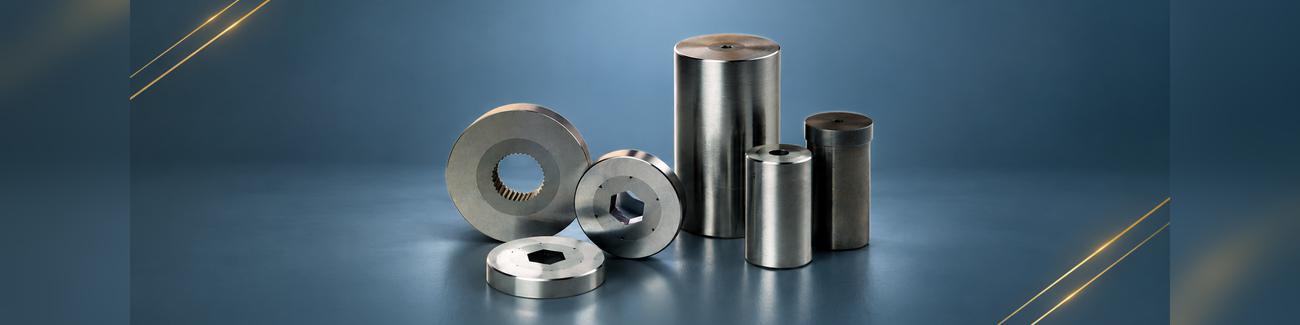
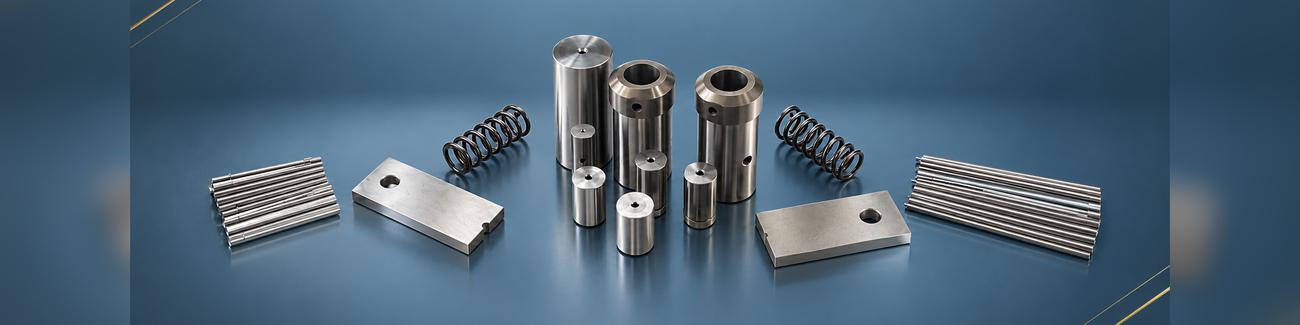
Heading dies and carbide inserts are forming tools used to manufacture screws, bolts and other cold-formed metal components. They work together with punches to support the wire blank and control material flow during forming.
Heading Die, Matryca & Carbide Insert for Fastener Manufacturing
A carbide-inserted heading die typically consists of a tungsten carbide insert fitted inside a steel die case. The insert provides the working surface, while the case supports the insert under forming pressure.
The terms Heading Die, Matryca and Carbide Insert are related, but they describe different aspects of the tooling.
What Is a Heading Die?
A heading die, also called a header die or cold heading die, is a tool that holds and shapes a metal blank in a heading machine.
During the forming cycle, the punch applies pressure to the blank, while the die supports the material and controls the required geometry.
Main functions:
-
Hold and position the wire blank.
-
Control shank dimensions and forming profiles.
-
Guide material flow during heading or extrusion.
-
Support consistent fastener dimensions.
The finished shape depends on the combined design of the die, punch and forming sequence.
What Is Matryca?
Matryca is a Polish word for a die. In fastener manufacturing, it can refer to a cold heading or forming die used to shape metal under pressure.
The term describes a tool, rather than a particular material. A matryca may be manufactured from tool steel or constructed with a tungsten carbide insert and a steel case.
Main functions in cold heading:
-
Support the workpiece during forming.
-
Define the required bore or cavity profile.
-
Work with the punch to produce the specified component geometry.
For clear technical communication, use a more specific description such as cold heading die or carbide-inserted heading die when placing an order.
What Is a Carbide Insert?
A carbide insert is the inner working component of a carbide-inserted die. It contains the bore or cavity that directly contacts the workpiece.
In heading applications, carbide inserts are commonly made from cemented tungsten carbide. They may also be called carbide die cores or die nibs, depending on the component and its condition of supply.
Main functions:
-
Provide a wear-resistant forming surface.
-
Withstand high compressive loads.
-
Control critical bore and cavity dimensions.
-
Help maintain consistent forming performance.
In this context, a carbide insert is a forming component used inside a die case.
Materials and Construction
Tungsten Carbide Inserts
Cemented tungsten carbide combines hard carbide particles with a metallic binder. Its properties depend on the carbide grain size, binder content and material grade.
The selected grade should balance:
-
Wear resistance.
-
Toughness.
-
Resistance to compressive loading.
-
Suitability for the forming operation.
A higher-hardness grade does not automatically provide better performance. Material selection must consider the wire material, forming load and die design.
Steel Die Cases
The steel case provides structural support for the carbide insert. Proper case design, heat treatment and insert fit are important for reliable operation.
The required steel grade and fitting method should be determined from the tooling design and production conditions.
Common Designs and Applications
Heading dies and carbide inserts can be configured for different fastener dimensions and forming stages.
Common designs include:
-
Straight-hole dies.
-
Stepped-bore inserts.
-
One-piece and multi-section inserts.
-
Dies with head-forming cavities.
-
Custom-profile dies based on drawings.
Typical applications include:
-
Screw and bolt blank forming.
-
Shank sizing.
-
Cold extrusion.
-
Preforming for subsequent heading operations.
-
Custom cold-formed metal parts.
Tooling for flat, oval, fillister, hexagon and other head styles should be reviewed against the complete fastener drawing and forming sequence.
Information Required for Custom Tooling
Please provide the following information when requesting a quotation:
-
Heading machine model
-
Die case dimensions
-
Wire material and diameter
-
Finished screw or bolt size and length
-
Required bore profile, cavity dimensions and tolerances
-
Forming stage
-
Tool drawings, part drawings or reference samples
Drawings and samples help confirm the required tooling geometry and reduce specification errors.
Frequently Asked Questions
What is the difference between a heading die and a carbide insert?
A heading die is the forming tool installed in the machine. In a carbide-inserted design, the carbide insert is the inner working component supported by the steel case.
Are Heading Die and Header Die the same?
Both terms are commonly used for heading tooling. “Cold heading die” identifies the application more specifically.
Does Matryca mean a tungsten carbide die?
Not necessarily. Matryca means a die in Polish. The material and construction must be specified separately.
Why is tungsten carbide used for heading die inserts?
Tungsten carbide provides high wear resistance and compressive strength. An appropriate grade and properly supported design help the insert maintain its working profile during production.
Which carbide grade should be selected?
The suitable grade depends on wire properties, forming severity, impact loading and die geometry. Grade selection should balance wear resistance and toughness.
Can a carbide insert be replaced?
Replacement may be possible if the die construction allows it and the case remains suitable for reuse. The case condition, fit and alignment should be inspected first.
What affects heading die service life?
Service life depends on material selection, die design, insert support, lubrication, wire condition, machine alignment and operating load.
Request a Quote for Your Heading Tooling
Send your drawings, wire specifications, die case dimensions and finished-part requirements for a tooling review.
These details help determine a suitable heading die configuration and carbide insert material for your application.