


Taiwan Stable Carbide Oblong Heading Die, Carbide Tools, Moulds
GXP Click here
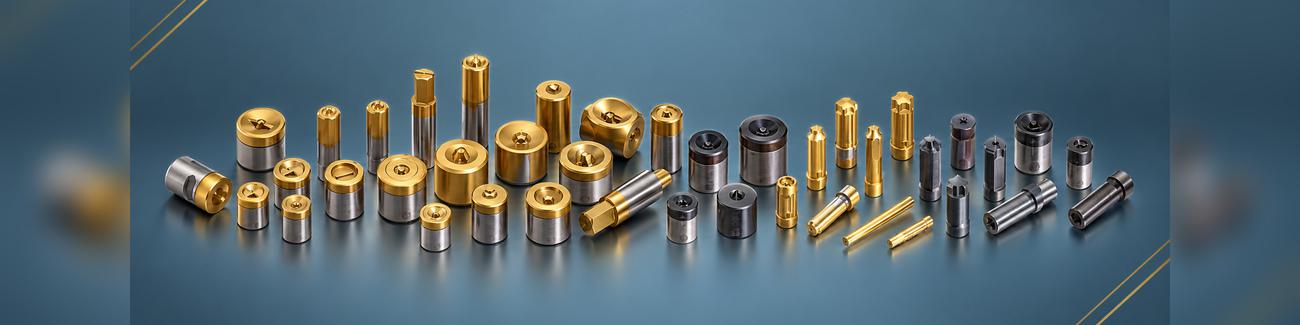
Carbide oblong heading dies are custom forming tools for fasteners and metal components with elongated profiles.
Designed for stable forming and consistent dimensions, the tooling combines a wear-resistant carbide working surface with suitable structural support. Each design follows the part drawing, wire material and machine requirements.
Taiwan Carbide Oblong Heading Dies, Tools & Moulds
A carbide oblong heading die is a cold forming tool with an elongated working profile defined by the component drawing.
“Oblong” describes a shape longer in one direction than the other. The exact contour, corner radii and dimensions must be specified.
Main functions:
-
Support and position the metal blank.
-
Form the specified oblong profile.
-
Guide material flow during heading.
-
Control critical dimensions.
The final geometry depends on the complete die-and-punch arrangement.
What Are Carbide Tools and Moulds?
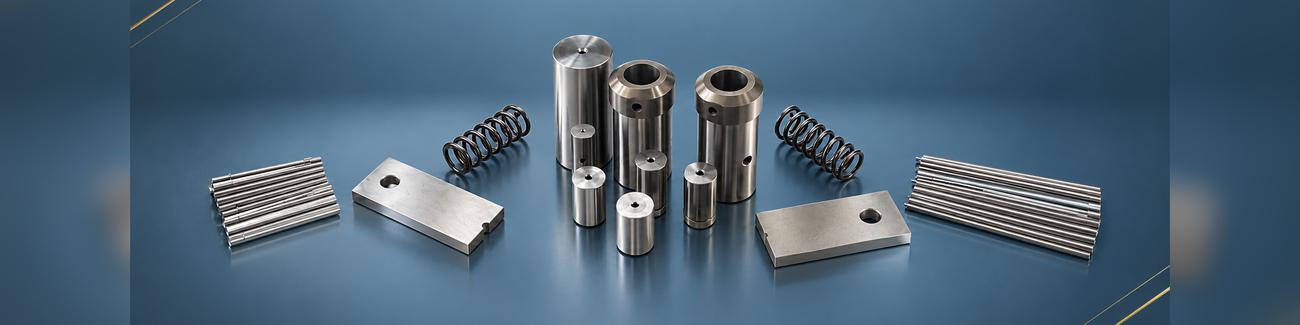
Carbide tools are forming components made entirely or partly from cemented carbide. Examples include heading die inserts, forming punches and extrusion tools.
Moulds is a broader term for shaping tools. In cold heading and fastener production, dies is the more specific term.
These tools shape or support the workpiece while providing a wear-resistant working surface.
Materials and Construction
| Component | Typical Material | Function |
|---|---|---|
| Working insert | Cemented tungsten carbide, commonly with a cobalt binder | Provides wear resistance and compressive strength |
| Die case | Heat-treated alloy steel or tool steel | Holds and supports the insert |
Carbide grade selection depends on the forming load, wire material and profile geometry. The appropriate grade balances wear resistance and toughness.
Custom Tooling Options
-
Oblong profiles with specified lengths and widths.
-
Drawing-defined corner and end radii.
-
Straight or stepped forming cavities.
-
Machine-specific case dimensions.
-
Required tolerances and surface finishes.
Stable performance depends on suitable tool design, insert support, lubrication and machine alignment.
Information Required for a Quote
Please provide:
-
Finished-part and tooling drawings.
-
Oblong profile dimensions and radii.
-
Wire material and diameter.
-
Machine model and die case dimensions.
-
Required tolerances and reference samples.
FAQ
Does oblong mean oval?
Not always. An oblong profile may have straight sides and rounded ends or another elongated contour. The drawing defines the exact shape.
Does the die form an oblong head or body?
It depends on the tooling design. Please identify the required feature and forming stage on the drawing.
Is an oblong heading die the same as a trimming die?
No. A heading die shapes material through forming. A trimming die removes excess material to produce the required outline.
Why use tungsten carbide?
Tungsten carbide provides high wear resistance and compressive strength, helping maintain the working profile during repeated forming.
Can the tooling be customized?
Yes. Profiles, cavity dimensions, radii and case sizes can be reviewed according to your drawings.
What affects tool service life?
Carbide grade, profile design, insert support, lubrication, machine alignment and forming load all affect service life.
Request a Quote
Send your drawings and production requirements for a review of the tooling design and material.